in our e-book by H. Peter Aleff |
| Volume 1: its siblings Senet and Snake Game, | |||||||||
and its surviving sequel the Royal Game of the Goose | ||||||||||
2.3. Similarities with other gameboard tracks Similarly, in Ugarit on the Syrian coast one of the words for "fire" was the name of Agni, the Indian Vedic god of fire who led to Latin "ignis" and so provided English speakers with "ignition"26. Moreover, board games travel easily and spread widely, like most other numerical traditions, and are often found distributed in almost identical form over large regions or in widely separated areas. For instance, the ancient game of "Five Lines" is still being played in Crete and, of all other places, also in Northern India27. A board for this game, shaped like a five-pointed star, was also found chiseled into the roofing slabs of a temple at Kurna in Egypt, built during the 14th century BCE. The people of the Indus Valley, or Harappan, civilization shared many other traits with the Cretans of their time, such as, for instance, the bull cult and snake worship, and an emphasis on maritime trade (practically all the Harappan cities were built on the seashore or on navigable rivers). Both had also the most advanced sanitary plumbing systems of their time. "In the oldest games the board has an even number of cells but in all existing games the board has an odd number. All boards contain a number of marked or crosscut cells which include the central cell on odd-sided boards and the four central cells on even-sided boards from which men are borne, the middle cells of the four sides which serve as entry, and occasionally the four corner cells. Men occupying a crosscut cell are immune from capture. (...) Each player enters his men in the crosscut cell before him and moves anti-clockwise round the border of the board and then clockwise round the inner cells until the men reach the central cell to be borne30.
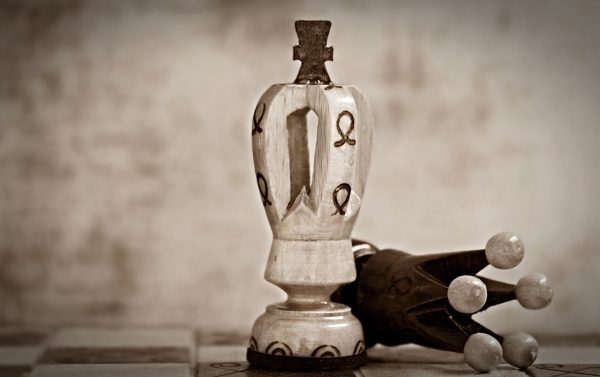
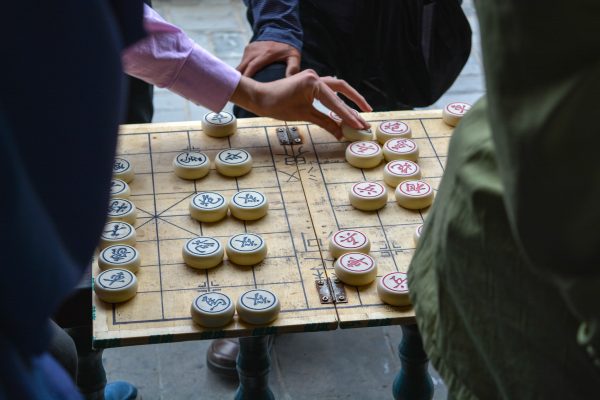
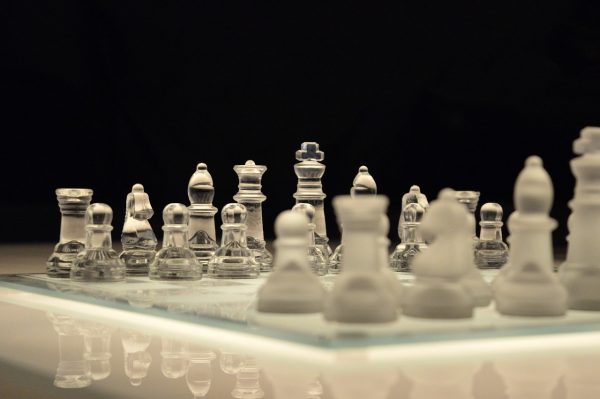
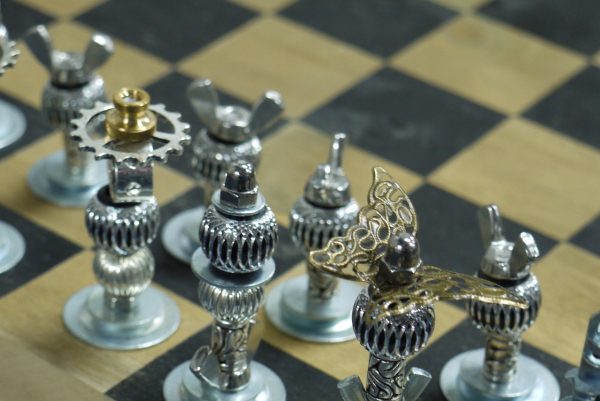
The U-turns in the paths on both sides of the Phaistos Disk are therefore yet another feature that associate it with gameboards. The so defined tracks also place both of the outer rosettes at the beginning or end of the path on their side so that three of the four path ends are marked with rosettes, just like the significant fields on many other ancient gameboards. 2.4. Shapes and sizes of gameboards It would be easy to object that these gameboards are square, and the Disk is round. However, this apparent difference is no obstacle to their possible relationship because many designs exist in both square and round versions. An excellent parallel is the classical Labyrinth pattern which appears routinely in both its square and circular forms, including on some Cretan coins more than a thousand years younger than the Disk which have also sometimes an eight-fold rosette or star at their center3 2. Another example of squares coexisting with circles is the game of Chess which evolved on one of those square Indian boards but was also played in slightly modified form as "Byzantine Chess" on circular boards33.Another possible objection to the gameboard interpretation might be that the Disk seems too small for that use. It’s diameter is only six and a half inches, and most gameboards from antiquity were usually a foot across or larger, as they are today. Playing a game on that small Disk may seem akin to polishing the toenails of a mosquito. On the other hand, we have even smaller travel editions of Chess and many other games, and not all of them are magnetic to hold the pieces in place. The far-traveling Cretans could easily have made miniature versions of their favorite games, too, to bring them along on the wine-dark sea for the times when their swift wind-winged ships were beached and becalmed. A gameboard skeptic might also ask why the fields on the Disk cover both sides. It would surely have been hard to play on the lower track while the upper one was in use. However, many gameboards in ancient Egypt were fashioned with tracks on both sides, Senet on one and "20 Squares" on the other. The users of the Disk could also well have completed a race on one side before flipping it over and continuing on the other side. However, the two sides of the Disk were not necessarily intended for two separate games. The absence of a rosette at one track end suggests that the game-path did not end or begin there but continued on or from the other side, and that both paths were meant to be joined. Moreover, the Disk itself may not have been made for playing the game on it. It might simply have served as the notepad for recording the sequence of signs on a board where the two halves of the track were joined. That clay notepad would then have allowed its possessor to reproduce said lengthy sequence correctly on a larger and more ornate gameboard, or maybe even in a floor mosaic, as reconstructed on the Labyrinth gameboard described in Volume 2 of this e-book, and also in the Labyrinth- related pages of our online booklet for the Game of the Goose and of the Labyrinth.
| ||||||||||
| ||||||||||
Contact us at recoveredscience.com | ||||||||||